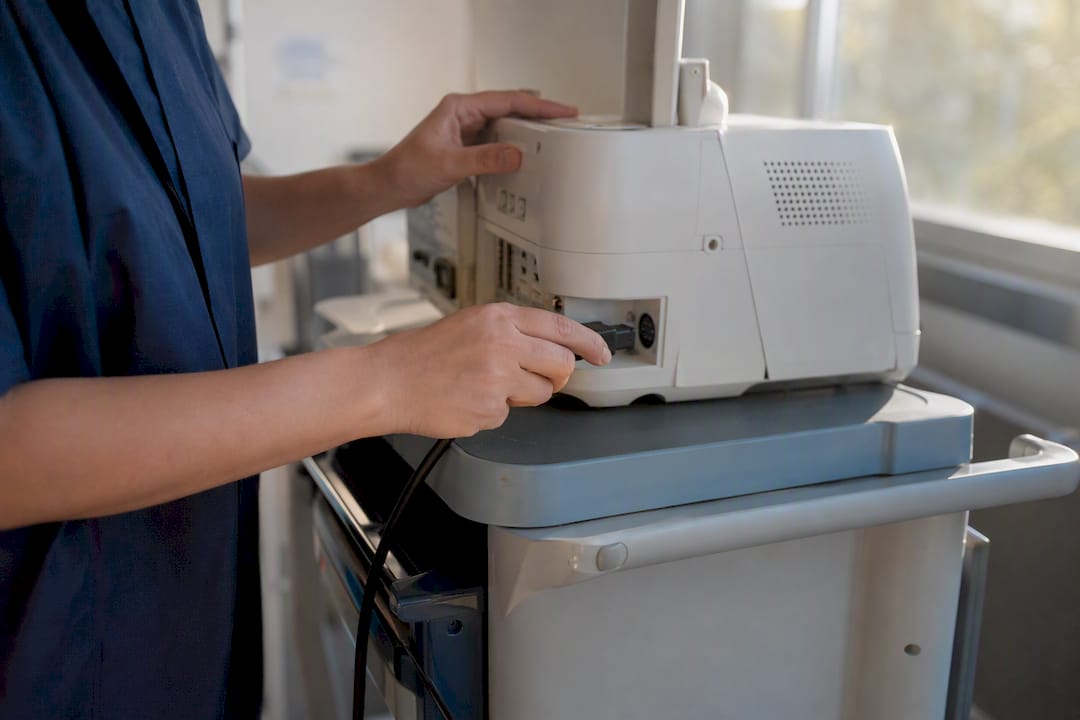
If you need equipment now, apply for advisor-structured medical equipment financing or request a $1 buyout lease quote if ownership is the goal. Most deals under a lender's app-only threshold get decided fast, and advisor-led funding often closes in 1 to 3 business days. Planning to keep the asset long term? Flag Section 179 with your CPA before you sign.
- Start with an advisor conversation, not a vendor quote, if you want to compare structures.
- Ask about app-only approval before you gather tax returns and bank statements.
- Confirm whether the equipment qualifies for Section 179 in the tax year you place it in service.
Quick fact: A $150,000 imaging system typically runs around $2,800 a month, depending on term length and rate.
Key Takeaways
The fastest path to funded equipment combines advisor-led lender matching with a financing structure chosen for your tax and cash flow needs, not just the lowest rate.
| Point | Details |
|---|---|
| Start with an advisor | Advisor-led applications compare multiple lender programs instead of one vendor's finance arm. |
| Match structure to goals | Choose a term loan or $1 buyout for ownership, an FMV lease for flexibility. |
| Know your documentation tier | App-only approval often applies under mid six-figure deals; larger amounts need tax returns and bank statements. |
| Confirm tax treatment early | Section 179 often applies to loans and $1 buyouts; confirm with your CPA before year-end. |
| Consider Surge-financial | Surge-financial has facilitated over $2 billion across 500-plus deals with funding often closing in 1 to 3 business days. |
This article is general information, not a substitute for advice from a qualified financial advisor.
What Medical Equipment Financing Actually Covers
Medical equipment financing is a loan or lease you use to acquire diagnostic, surgical, or administrative equipment without paying the full purchase price up front. Leasing typically means lower monthly payments and the option to upgrade at the end of the term. Financing through a loan means you own the asset from day one and build equity as you pay it down.
Practices commonly finance imaging systems (MRI, ultrasound, digital X-ray), surgical suites and sterilization equipment, EHR hardware, servers, and networking gear, and refurbished or OEM certified pre-owned equipment.
The real reason most practices choose financing over a cash purchase isn't just affordability. It's cash flow control. Spreading a $200,000 purchase over 60 months keeps working capital available for payroll, supply orders, and unexpected repairs.
Which Financing Structure Fits Your Practice?
Not every deal should look the same, and the structure you pick changes your tax position, your balance sheet, and your flexibility down the road.
- Term loan. You own the equipment from the start, payments are fixed, and this fits practices planning to use the equipment past its financed term.
- Fair market value (FMV) lease. Payments run lower than a loan because you're not paying toward ownership. At the end of the term you return, renew, or buy at market value.
- $1 buyout lease. Structured like a loan in disguise. You pay it down like a lease, then own the asset for $1 at the end. This often qualifies for Section 179 treatment.
- Seasonal or step payments. Payments start low and increase as new equipment ramps up patient volume and reimbursements.
- Usage-based or equipment-as-a-service models. You pay based on volume or usage rather than a flat schedule.
Who Qualifies and What Lenders Actually Ask For
Deal size drives documentation requirements more than anything else. Many specialist equipment lenders offer application-only approvals for smaller deals, often up to the mid six figures, with decisions coming back same day or within 24 to 48 hours. Larger transactions typically require two years of tax returns, recent bank statements, and sometimes a personal guarantee.
Startups and newer practices without long credit histories can still qualify, often with a stronger down payment or a personal guarantee from an owner. Refurbished equipment is financeable too.
How Do You Choose the Right Financing Structure?
Before comparing quotes, rank your priorities. Cash preservation, balance-sheet impact, tax treatment, and how fast you expect to replace the equipment all point toward different structures.
- List your top priority: lowest payment, fastest ownership, or off-balance-sheet flexibility.
- Match that priority to a structure. Lowest payment usually means FMV lease; fastest ownership means term loan or $1 buyout.
- Get quotes on the same term length so you're comparing real numbers.
- Ask your CPA how each option affects this year's deductions before you sign anything.
From Application to Funded: What the Timeline Looks Like
The process usually runs: get a vendor quote, submit a financing application, receive approval and review terms, sign documents, lender pays vendor directly, equipment gets delivered and installed. App-only deals can fund in 1-3 business days. Larger deals with full documentation typically take 5-10 business days.
Section 179, Depreciation, and What Your CPA Needs to Know
Section 179 lets you deduct the full purchase price of qualifying equipment in the year you place it in service, up to the annual limit. For 2026, the limit is over $1.2 million. This applies to loans and $1 buyout leases, not FMV leases. Bonus depreciation is being phased down but still available at 40% for 2026.
Why Advisor-Led Deals Close Faster
Working with an advisor like Surge Financial means you get matched with the right lender program instead of being stuck with one vendor's finance arm. Surge has facilitated over $2 billion across 500-plus deals. Advisors compare rates, terms, and structures across multiple lenders simultaneously, which means you get a better fit without spending weeks shopping on your own. Funding often closes in 1 to 3 business days for qualified applicants. Visit surge-financial.com/business-funding/equipment-financing to start.
What the Conventional Advice Gets Wrong
Most equipment financing guides tell you to shop rates. That's incomplete advice. The lowest rate on the wrong structure costs more than a slightly higher rate on the right one. A 6% FMV lease where you return the equipment can cost more than a 7.5% term loan where you own it outright. Always compare total cost of financing, not just the monthly payment or the rate.
Get Funded for Equipment Without the Runaround
If you're ready to move, the fastest path is a short conversation with an advisor who can match you with the right lender. Surge Financial works with practices nationwide and can structure financing for imaging systems, surgical suites, EHR hardware, and more. Start at surge-financial.com/business-funding/equipment-financing or call 954-787-4348.
Sources: SBA.gov equipment financing guidelines, IRS.gov Section 179 deduction limits, industry lender rate sheets and qualification thresholds.
Get Started with Surge Financial
Talk to a dedicated Surge Financial advisor. No hard credit pull, no upfront fees, and you see every option before deciding.
Get Started →